Home › Pool Enclosure Installation
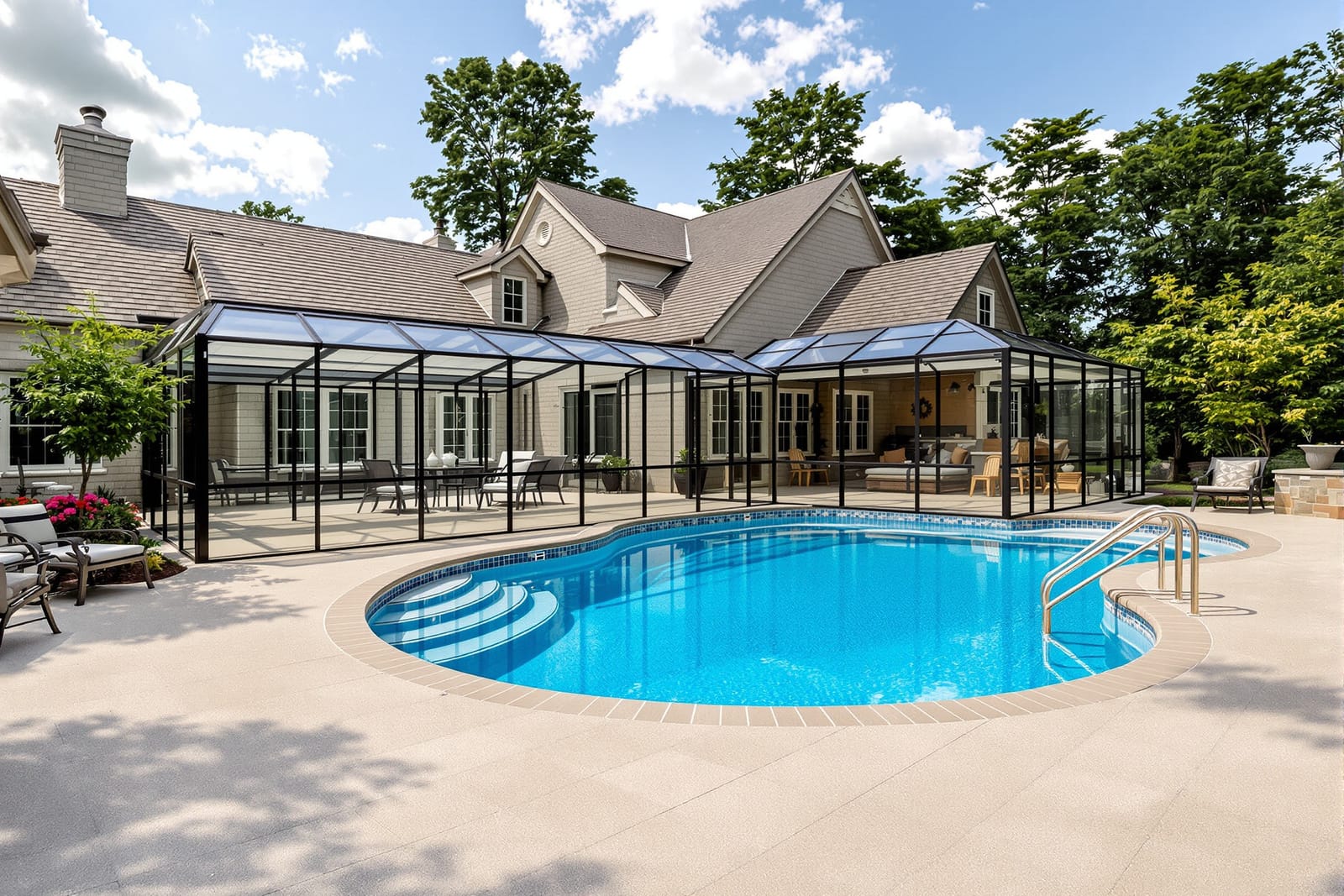
Naples Screening specializes in custom pool enclosure installation in Naples, FL, building strong aluminum cages around in ground pools. Our designs reduce debris, keep pests away, and add shade so you can enjoy your pool more often. We handle permitting, engineering, and construction for seamless new enclosures or replacements.
Naples Screening provides professional pool enclosure throughout Naples, FL, Florida and the surrounding area. Our licensed, insured crew delivers safe, clean, on-time work with a free estimate before anything begins. Call 239-893-6157 or request your free quote.
Pool Enclosures Built for Naples’ Climate and Codes
A pool enclosure in Naples is not just a screen around your pool. For most homeowners in Collier County it is a storm‑tested structure that has to stand up to salt air, intense sun, daily summer thunderstorms, and local building codes. Naples Screening designs and installs pool enclosures specifically for our coastal climate and for the way people actually use their lanais here.
When we look at your property, we are thinking about three things right away. First, wind exposure and how your cage will behave in a tropical storm. Second, how the sun moves across your pool deck so you get shade where you want it and keep your living areas bright. Third, how we can protect views of the Gulf, preserves, or golf course, which is usually why people moved to Naples in the first place.
Naples Screening works within Florida Building Code and Collier County permitting rules every day. That means the size of your enclosure, how it ties into the house, and what kind of fasteners we use are not guesses. They are engineered decisions. The goal is a clean looking aluminum structure that drains properly, stays quiet in the wind, and gives you a bug‑free outdoor room you can use 10 months of the year.
Our Pool Enclosure Installation Process Step by Step
A solid pool enclosure starts long before we bring any aluminum on site. Naples Screening begins with a site visit where we measure the deck, check slab condition, look at roof lines, and locate irrigation, lighting, and existing drainage. We talk through how you want to use the space, whether you plan to add an outdoor kitchen, privacy walls, or extend the deck later.
Next, we create a layout drawing and, when required, work with an engineer to size beams and specify connection details for your exact house and exposure. This package is what we use for the Collier County permit application. We handle the permit paperwork, drawings, and any required revisions, and we keep you informed of approval timelines so you know when work will actually start.
Before installation, our crew verifies deck elevations and checks for cracks or hollow spots in your concrete where anchors will go. Any weak areas are repaired or relocated so fasteners grab solid material. On installation day we set the aluminum base tracks and wall posts first, using stainless or coated fasteners approved for coastal environments. Every anchor is properly embedded and sealed to reduce moisture intrusion into the slab.
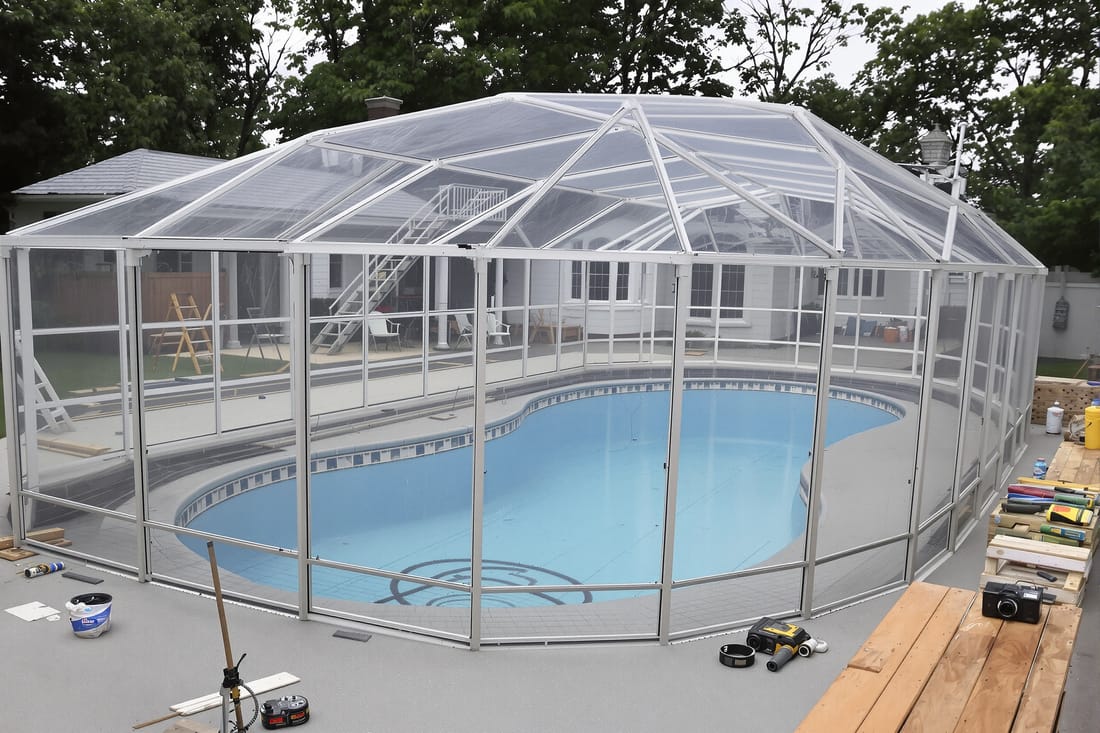
We then assemble the roof sections on site, often on temporary stands, and lift them into place as complete frames. This keeps everything square and reduces stress on the screen fabric. Once the structure is plumb and tied into the house or freestanding footings, we install doors, bug sweeps, and hardware. Screening is installed last, panel by panel, tightened to the right tension so it will not flap in the wind yet still have some give during a storm.
Before we wrap up, we adjust door closers, check latches and locks, verify that gutters and downspouts run clear, and wash down the new enclosure so you can see any issues clearly during the final walk‑through.
Design Options and Materials That Work in Naples
The main frame of a pool enclosure is almost always aluminum in Naples because it holds up to salt and moisture better than steel and does not add unnecessary weight to the pool deck. At Naples Screening we use heavy gauge aluminum members sized to your enclosure span, with powder coated finishes that resist chalking and fading in direct Florida sun.
Screen material is where many projects succeed or fail. Basic fiberglass screen is cheaper but tends to stretch and tear sooner in high wind zones. For most Naples pool enclosures we recommend either a tighter weave insect screen to keep out no‑see‑ums or a higher strength screen designed for wide spans and stronger gusts. Around golf course properties, we often specify impact resistant screen in key areas that face tee boxes or fairways to better handle occasional ball strikes.
You can choose from different roof profiles, such as a standard gable, mansard, or hip roof layout. In Naples, mansard roofs are popular because they give good height over the pool and help spread wind loads, but that is not the only option. On two‑story homes, we sometimes design step‑down or connected roof sections to clear second floor windows while keeping the structure within code height and neighborhood association rules.
Visibility is also a design choice. Many customers ask for “picture window” panels on the water or preserve side. This means fewer vertical supports and larger screen spans to highlight the view. Naples Screening designs these sections carefully so the big openings still meet engineering requirements and do not create weak points during a storm.
Other options we plan for include pet doors, privacy screen sections along neighbor sidelines, extra wide doors for moving furniture in and out, and framing that allows for future installation of clear vinyl panels or motorized screens if you decide to enclose the space more fully later.
What Drives Pool Enclosure Cost in Naples
Customers often ask why two pool enclosures that look similar in photos can have very different prices. The real cost drivers are in the details. Overall footprint and height matter, but so does how far the enclosure spans without support and how it ties into your existing home. A large, open picture window facing a preserve generally requires heavier aluminum and upgraded screen compared to a standard layout.
Local conditions on your lot also affect price. If your pool deck is narrow or very close to property lines, we may need more complex beam layouts or freestanding footings. Existing concrete condition matters too. An older deck that needs crack repair or extra anchoring work will add labor but is critical for safety. Ignoring this step leads to loose base rails, rattling frames, and leaks where the enclosure meets the slab.
Material choices are another factor. Standard fiberglass screen costs less up front but usually needs replacement sooner in our climate. Upgraded high strength or no‑see‑um screen costs more at installation but holds up better to wind, pets, and daily use. Hardware choices also add up. Using stainless steel fasteners and quality door hardware is not optional this close to the Gulf if you want to avoid corrosion streaks and stuck latches in a few years.
Permitting and engineering are part of the real cost as well. Naples Screening includes permit management, engineered drawings where required, and all inspections in our proposals. This avoids surprises when the county requires a detail that was not planned for. Our quotes are structured so you can see where your money is going, and we explain any line items unique to your property before work starts.
Common Pool Enclosure Problems and How We Prevent Them
Poorly planned pool enclosures in Naples tend to fail in the same ways. You see frames that flex too much in everyday wind, doors that never close right, rust bleeding from screws, and standing water collecting along the base after heavy rain. At Naples Screening we design and install with these common failures in mind so you are not paying to fix someone else’s shortcuts a few years later.
One of the biggest issues is inadequate anchoring or the wrong type of fastener. In our installs we use fasteners that are matched to the concrete strength and coastal environment, and we avoid mixing incompatible metals that accelerate corrosion. Every critical connection is tightened to specification, and we inspect anchors again after the first heavy screen tensioning to make sure nothing has shifted.
Another common problem is water management. If an enclosure is set directly on a flat deck without considering slope and drainage, water will sit along the frame, seep into small cracks, and stain or weaken the area over time. Before we attach any base rails, we confirm falls and adjust the layout or add small notches or drains where needed so water can move away from the structure. Where the pool cage meets the home, we flash and seal properly so driving rain does not work behind stucco or into soffits.
Noise and movement in everyday afternoon storms are also complaints we hear when we are called to repair other companies’ work. Excessive rattling usually means loose connections or under‑sized members. Naples Screening sizes structural members according to engineered spans and uses bracing where required so the cage feels solid, not flimsy, even on gusty days.
We also pay attention to day‑to‑day usability. Doors are positioned to line up with existing walkways and outdoor kitchens, not wherever is easiest to frame. Bug sweeps are set to the correct height for your pavers or deck so you are not dragging on the surface. Handles, closers, and locks are chosen for outdoor use in a salt environment so they keep working instead of seizing after one rainy season.
Why Work With Naples Screening for Your Pool Enclosure
Choosing a local installer matters for pool enclosures because our climate and codes are not the same as other parts of Florida. Naples Screening is based here, and our crews work from Golden Gate to Pelican Bay and down to Marco‑adjacent communities every week. We know the typical layouts of Naples homes, how different HOAs look at cage designs, and what Collier County inspectors focus on during structural and final inspections.
Working with us, you deal with a company that handles the full process. We help you evaluate whether to match the footprint of your existing deck or expand it, explain the tradeoffs between open view sections and standard framing, and show you screen samples that match your priorities for privacy, airflow, and durability. You will see a clear proposal, a realistic timeline that includes permitting, and an installation schedule that respects your neighbors and community rules.
Naples Screening does not aim to be the cheapest bid. Our focus is on cages that look clean, hold up in real weather, and are straightforward to rescreen or modify in the future. When you call us about a new pool enclosure, we treat it as a long‑term structure attached to your home, not a temporary backyard project.
If you are planning a new pool or replacing an older cage that has been through too many storms, we can coordinate with your pool contractor, paver installer, or roofer so the enclosure ties into their work correctly. This coordination is what keeps you from ending up with mismatched slopes, odd gaps, or conflicts between screen beams and rooflines. With Naples Screening, you get a pool enclosure designed for how you live in Naples, built to local standards, and ready for years of everyday use and summer storms.